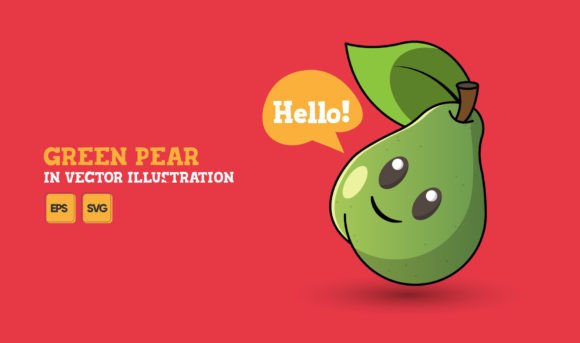
Green Pear Isolated in Vector
A Quiet Elegance for Embroidery Designers
As a designer who has stitched countless custom projects, I always start by evaluating the visual and technical qualities of an embroidery design before committing to use it. Green Pear Isolated in Vector is one such design that immediately caught my eye. Its clean lines and minimalist approach make it a strong candidate for both personal and commercial projects. But does it hold up under real-world conditions? Let’s break it down.
The First Impression: A Simple Shape with Subtle Depth
At first glance, Green Pear Isolated in Vector feels like a calm, unassuming design. The pear is rendered in flat vector form, which gives it a modern, almost abstract quality. There are no intricate details or complex patterns—just a single, well-proportioned shape. This simplicity is its strength, but also something to consider when thinking about how it will translate into physical embroidery.
The pear’s isolated placement suggests it’s meant to be used as a standalone graphic. It doesn’t require a background or additional elements to stand out, making it versatile for branding, social media posts, and infographics. However, this also means it lacks the richness of more detailed illustrations. For a project that requires depth or storytelling, Green Pear Isolated in Vector might feel too sparse.
Real-World Use Cases: When Does This Design Shine?
Green Pear Isolated in Vector works best in scenarios where clarity and simplicity are key. Consider using it on custom apparel like tote bags, sweatshirts, or caps. The clean lines and minimal detail ensure that the design remains legible even after multiple washes. It also lends itself well to personalized gifts such as baby clothes or holiday items, where a subtle, elegant touch is desired.
For Etsy sellers and small shop owners, this design could be a great addition to a product line focused on minimalist aesthetics. It pairs well with other simple graphics or can be used as a standalone emblem on embroidered patches or aprons. If you’re looking to create a cohesive brand identity, Green Pear Isolated in Vector offers a consistent visual language that can be applied across various products.
Where to Be Careful: Technical and Practical Considerations
While Green Pear Isolated in Vector is a solid choice, there are certain situations where it may not perform as well. For instance, using it on small hoop sizes could result in a loss of detail. The design’s simplicity means that any reduction in stitch density or resolution could make it appear flat or less refined.
Dark fabrics and textured surfaces may also challenge the visibility of the design. Since it’s a flat illustration, it relies heavily on contrast between the thread color and the fabric. Choosing the right thread colors is crucial here. Additionally, if the design is used on stretchy or thin fabrics, it may not hold up well over time due to the lack of structural support.
Another consideration is the use of this design on curved surfaces like caps or hats. While the pear’s shape is symmetrical, the curvature of the surface could affect how the design appears when stitched. Testing on scrap fabric first is always a good idea, especially when working with new designs or unfamiliar materials.
Design Impact: Visual Appeal and Customer Trust
Visual appeal is subjective, but Green Pear Isolated in Vector has a quiet confidence that makes it appealing to a wide audience. Its minimalist style is versatile enough to fit into both contemporary and classic design schemes. This adaptability can help build customer trust, especially when used consistently across a brand’s visual assets.
When it comes to handmade products, the design’s simplicity can enhance the overall presentation. It allows the craftsmanship to take center stage without competing with busy or overly detailed graphics. This makes it ideal for personalized gifts and boutique merchandise where the focus is on the quality of the stitching and the uniqueness of the item.
Practical Designer Notes for Real Projects
Before using Green Pear Isolated in Vector in a real project, I recommend testing it on scrap fabric to assess stitch density and overall appearance. Check the thread color contrast against different fabric backgrounds, including light and dark tones. This will give you a better idea of how the design will look in practice.
Using proper stabilizer is essential, especially when working with delicate or stretchy fabrics. Confirm the hoop size based on the design’s complexity and the product you’re planning to use it on. Also, consider whether the design works for both personal and commercial use. If you intend to sell finished items or digital products, make sure you have the appropriate licensing rights.
Finally, don’t forget to test the design in black and white mockups. This helps identify any issues with stitch density or clarity that may not be apparent in color. With these considerations in mind, Green Pear Isolated in Vector can be a reliable choice for a variety of embroidery projects.