Homeware Graphics for Modern Design Projects
A First Impression of Homeware
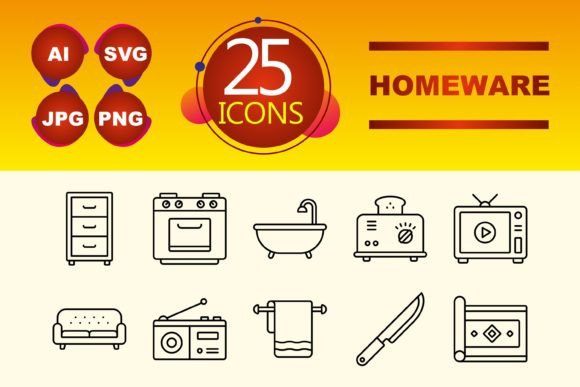
The first glance at Homeware feels warm and approachable. The line icons are clean, with a subtle geometric flair that suggests both modernity and practicality. They carry a sense of familiarity, as if they’ve been carefully crafted to fit into everyday design scenarios. This set leans toward a minimalist aesthetic, making it ideal for projects that require a balance between visual appeal and clarity.
Fitting the Right Project
Homeware is particularly well-suited for small business branding and creative marketplace ventures. Imagine working on a handmade brand or an Etsy shop that needs a cohesive visual identity. These icons can serve as the backbone of a logo design, helping to establish a consistent look across all marketing materials. Their versatility allows them to be used in digital product designs, such as Canva templates, social media graphics, and even Cricut projects.
For a seasonal campaign or local event, Homeware’s decorative elements can add a touch of personality without overwhelming the overall design. Whether it's for a blog post, a printable wall art piece, or a t-shirt design, these icons provide a subtle yet effective way to enhance the visual mood of the project.
Where Homeware Shines
Homeware performs exceptionally well in large layout areas and hero graphics. When placed on a product mockup or a website landing page, these icons help draw attention and guide the viewer’s eye. They also work beautifully as decorative accents in editorial design or as part of a themed collection.
In packaging design, Homeware can elevate the visual appeal of product labels and boxes. A simple icon can make a significant difference in how a product is perceived, especially when combined with a clean, modern font. For print-on-demand sellers, these icons can be used in sticker design, merchandise, or even sublimation design to create a cohesive brand presence.
Where to Use with Caution
However, there are situations where Homeware might not be the best choice. In small sizes, the icons can become too detailed, leading to a loss of clarity. They may also struggle in crowded layouts or complex backgrounds, where they could get lost or appear cluttered.
For projects requiring a very clean visual hierarchy, such as professional corporate materials, Homeware might introduce unnecessary visual noise. It’s important to consider whether the style of these icons aligns with the client’s brand identity. If the project leans toward minimalism or requires a highly professional look, Homeware might not be the optimal choice.
Design Considerations for Commercial Use
Before using Homeware for a real client project, it’s crucial to test it in various contexts. Check how it looks in black and white, as this will reveal any hidden details or potential readability issues. Preview the icons on both light and dark backgrounds to ensure they maintain their impact across different environments.
Test the icons at small and large sizes to confirm their scalability. Place them on real mockups to see how they integrate with other design elements. If you're planning to print, review the file formats and inspect PNG transparency if included. SVG files offer greater editability, which is especially useful for customizing the icons further.
It’s also worth comparing Homeware with different font styles—serif, sans serif, script, and display—to ensure a harmonious visual hierarchy. Confirm that you have a commercial license before using the asset for a client or business project. This ensures that you’re compliant with usage rights and avoid any legal complications.
Why Homeware Matters for Designers
Homeware offers a valuable addition to any designer’s toolkit, especially for those working with small businesses or creative marketplaces. Its ability to blend seamlessly into a variety of design scenarios makes it a versatile graphic design asset. Whether you’re creating a brand identity, designing social media graphics, or working on a print-on-demand product, these icons can help elevate the final result.
By understanding where Homeware works best and where it should be used carefully, designers can make informed decisions that enhance the overall quality of their projects. With the right approach, Homeware can contribute to a polished, professional look that resonates with the target audience and supports the brand’s visual goals.