Plumbing Icons for Embroidery
A Designer’s Take on Practical Use
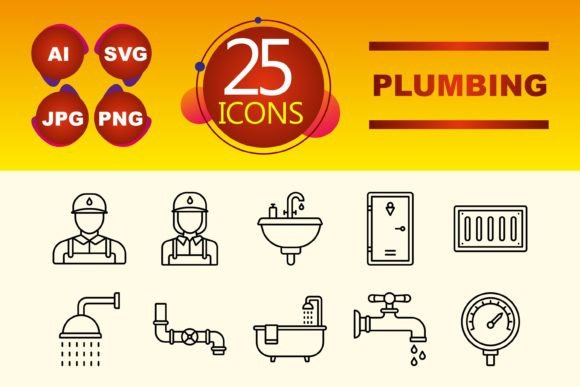
As a designer who works with both digital and physical media, I often find myself evaluating embroidery designs before committing to them for real projects. Today, I’m reviewing the Plumbing icon set, which promises a collection of icons that can be used in a variety of design contexts. But when it comes to embroidery, the question is always the same: Will this work in practice?
First Impressions: Clean and Functional
The first thing I notice about Plumbing is its clean, minimalist style. The icons are line-based, which gives them a modern, sleek feel. They don’t have excessive detail or ornamentation, which makes them versatile for different applications. However, as an embroidery designer, I know that simplicity can sometimes be a double-edged sword. Line icons can look great on screen but may not translate well to fabric without careful consideration.
Visually, the Plumbing icons evoke a sense of professionalism and precision. They’re ideal for projects that require clarity and recognition, such as custom apparel, personalized gifts, or branding materials. The theme is straightforward—no unnecessary elements, just the essentials. This makes them suitable for use in digital embroidery files or printable mockups where the visual impact needs to be clear and unambiguous.
Real-World Application: A Custom Tote Bag Project
To test the practicality of Plumbing, I imagine using it in a custom tote bag design. The idea is to create a simple, functional piece that appeals to a small business owner or Etsy seller looking to offer unique, handcrafted items. The Plumbing icons could serve as a subtle yet meaningful accent, perhaps as part of a larger design that includes other icons or text.
However, I need to consider how these icons would appear once stitched. Line icons rely heavily on contrast and stitch density. If the thread color doesn’t stand out against the fabric, the design could become lost. For example, using white thread on a light-colored fabric might result in a design that’s too faint to be useful. That’s why I recommend testing the design on scrap fabric first, checking thread colors and stitch density before proceeding.
Where to Use with Caution
While the Plumbing icons are versatile, they aren’t without limitations. Here are some scenarios where you might want to exercise caution:
- Small hoop sizes: The line style can make the design appear sparse or underwhelming if the hoop is too small.
- Textured fabrics: Fabrics with a rough texture can cause the design to look uneven or lose definition.
- Dark fabric: Without sufficient contrast, the icons may blend into the background, making them hard to see.
- Stretchy or thin fabric: These can distort the design during stitching, especially around corners or intricate details.
- Curved surfaces like caps or hats: The linear nature of the icons may not adapt well to curved areas, leading to a less polished result.
For these situations, it’s important to use the right stabilizer and ensure the design is properly scaled for the intended product. Testing in black and white mockups can also help identify potential issues before committing to a final product.
Visual Appeal and Customer Trust
The success of any embroidery project depends not only on the design itself but also on how it looks once completed. The Plumbing icons, with their clean lines and professional aesthetic, can enhance the overall appearance of a handmade product. When used correctly, they can elevate the perceived value of a personalized gift or small shop product.
However, poor execution can undermine customer trust. If the design appears low quality or poorly executed, it can damage the reputation of your brand. That’s why it’s crucial to review every detail—stitch density, color contrast, and layout—before finalizing a design for production.
Design Notes for Embroidery Professionals
If you're an Etsy seller or craft business owner, here are some key considerations when working with Plumbing:
- Test on scrap fabric: Always check how the design looks on different types of fabric before using it on your final product.
- Confirm thread color contrast: Choose thread colors that provide good visibility against the fabric.
- Review stitch density: Ensure the design is dense enough to maintain clarity without being overly heavy.
- Check hoop size: Make sure the design fits within the hoop size you plan to use.
- Inspect small details: Look for any potential issues with tiny lettering or intricate corners.
- Use proper stabilizer: This helps prevent distortion and ensures a cleaner finish.
- Compare light and dark backgrounds: Test the design on both to see how it performs in different lighting conditions.
- Confirm licensing: If you plan to sell finished products, ensure you have the proper rights to do so.
Conclusion: A Versatile Tool for the Right Projects
In conclusion, the Plumbing icon set is a solid choice for designers looking to add a touch of functionality and professionalism to their embroidery projects. Its clean, minimal style makes it ideal for a wide range of uses, from custom apparel to holiday gifts and commercial embroidery.
With the right approach and attention to detail, the Plumbing icons can become a valuable asset in your design toolkit. Just remember to test, review, and adapt based on the specific needs of your project. After all, the goal isn’t just to stitch a design—it’s to create something that resonates with your customers and stands the test of time.