Computer Science Graphics for Modern Content Publishing
The First Impression of Computer Science
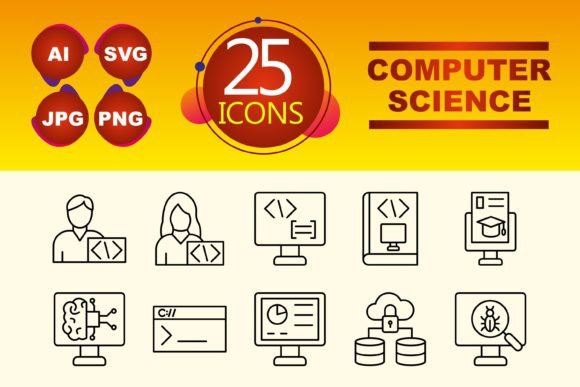
Upon first glance, Computer Science delivers a clean and modern visual language that speaks to the digital age. The icons are sharp, geometric, and precise, offering a strong sense of professionalism and technical accuracy. This set feels ideal for content creators who want to convey a sense of innovation, clarity, and forward-thinking in their editorial design. The mood is contemporary and tech-forward, making it a natural fit for blogs, educational platforms, and digital marketing sites focused on technology, programming, or data science.
Where Computer Science Fits Best in Editorial Design
Computer Science excels in environments where visual clarity and thematic relevance are key. It works particularly well as blog graphics, Pinterest pins, and website headers. These icons can be used to reinforce the subject matter of an article or guide, helping readers quickly grasp the content's focus. For instance, a blog post about coding fundamentals could use a Computer Science icon to anchor the featured image or serve as a visual cue within the body text.
It also shines in digital guides and lead magnets, where a consistent and recognizable visual style helps build brand identity. Whether you're creating downloadable printables or a Canva template for social media posts, these icons offer a reliable foundation for maintaining a cohesive design system across multiple platforms.
Supporting Content Performance with Computer Science
Using Computer Science in your publishing workflow can significantly enhance content performance. Its clean lines and structured forms support visual hierarchy, guiding the reader’s eye through your content with ease. This is especially important for web design and editorial design, where clear organization is essential for user engagement.
Moreover, the asset contributes to brand identity by reinforcing a professional and modern aesthetic. When used consistently across your site, it builds trust and recognition, which are crucial for content marketing and affiliate marketing efforts. Readers will perceive your content as more polished and credible when supported by high-quality design assets like Computer Science.
Real-World Use Cases for Computer Science
- Hero images: Use Computer Science icons to create engaging hero sections that draw users into your website or blog post.
- Article thumbnails: Incorporate these icons into your article previews to make them more visually appealing and informative.
- Pinterest pins: These icons are perfect for crafting eye-catching pins that stand out in a crowded feed.
- Newsletter headers: Add a touch of modernity to your email campaigns with a subtle yet impactful design element.
- Downloadable resources: Include Computer Science graphics in your worksheets, infographics, and printable templates to elevate their visual appeal.
- Social media graphics: Use these icons to create shareable visuals that align with your brand's visual language.
When to Use Computer Science Carefully
While Computer Science is a versatile graphic design asset, it’s not always the best fit for every context. In small mobile thumbnails, its intricate details may get lost, making it less effective. Similarly, in text-heavy blog images or low-contrast backgrounds, the icons might not stand out enough to serve their purpose.
For serious professional niches or corporate content, the playful nature of Computer Science might not align with the desired tone. It’s also worth noting that websites with a very minimal visual system could find this asset too bold or distracting. Always consider the overall design strategy before integrating new design assets into your workflow.
Publisher Notes for Using Computer Science
Before using Computer Science in your projects, ensure that you’ve tested it across both desktop and mobile screens. Check how it looks as a thumbnail, and preview it inside a real blog layout to see how it integrates with your existing design elements.
Test the icons with different headline texts to ensure they work well in various contexts. Check contrast and readability, and try it in black and white to confirm that it still holds up in grayscale. Place it beside serif, sans-serif, script, and display fonts to see how it interacts with different typographic styles.
Review file size and optimize images for web performance. Compress images properly to maintain quality without sacrificing speed. Lastly, confirm that you have a commercial license before using Computer Science on monetized websites, affiliate pages, or paid content products.
Conclusion: A Powerful Graphic Design Asset
Computer Science is more than just a collection of icons—it’s a valuable graphic design asset that can elevate your content publishing workflow. From blog graphics to digital guides, it offers a range of applications that support both visual hierarchy and brand identity. By understanding where it works best and where it should be used carefully, you can leverage this asset to create more engaging, professional, and trustworthy content for your audience.